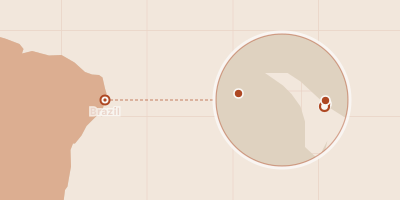
The Ramayana trail runs from Ayodhya, Rama's traditional birthplace, through Chitrakoot, Panchavati and Hampi to Rameswaram, Dhanushkodi and Sri Lanka's Sita Eliya. Every place here is a traditional identification, not a proven site.
The route follows the epic's order: the exile decreed in Ayodhya, the forests, Sita's abduction, the search in Kishkindha, Hanuman's find in Lanka, and the bridge to Lanka. Most stops are living pilgrimage places you can visit.
Top Gun (1986) is set at Naval Air Station Miramar in San Diego and was filmed there, in Oceanside, at Kansas City Barbeque and at NAS Fallon in Nevada.
This route follows Maverick and Goose from the Miramar flight line to Charlie's house in Oceanside, the piano bar where they sing "Great Balls of Fire", the Nevada skies of the dogfights and North Island, where the sequel Top Gun: Maverick puts its school. Miramar, Fallon and North Island are active military bases.
The Battle of Okinawa, fought from March to June 1945, ran from the Kerama Islands and the Kadena landing beaches to Shuri Castle and Mabuni Hill in the south of the island.
This route follows the land campaign through six places you can find on a map today, from the first landing to the Cornerstone of Peace, where the names of those who died on all sides are inscribed. Several sites are memorials, and the pins for the Kerama Islands and Kakazu Ridge are approximate.
Minamoto no Yoshitsune's life runs from Kurama temple in Kyoto through the Genpei War battles of Ichi-no-Tani in Kobe, Yashima in Takamatsu and Dan-no-ura near Shimonoseki, to his last stand at Takadachi in Hiraizumi.
The route follows the famous general from a boy among the monks to a hero turned out by his own brother at Koshigoe. Battle sites are approximate; the temple, the Koshigoe temple and the Hiraizumi chapel can be visited.
On the eve of his coronation, Prince Rama of Ayodhya is sent into the forest for fourteen years, so that his stepmother's son can rule. His wife Sita and brother Lakshmana go with him. In the forest Sita is carried off by Ravana, the demon king of Lanka, and Rama, helped by Hanuman and an army of vanaras, monkey-like forest people, crosses the sea to win her back. The Sanskrit epic attributed to Valmiki runs to some 24,000 verses and is still retold, staged and worshipped across South and Southeast Asia.
For centuries pilgrims have tied its episodes to real places, from Ayodhya to the hills of Sri Lanka. This route follows those traditional identifications, which are matters of faith and local memory rather than archaeology. Most of the stops are living temples.
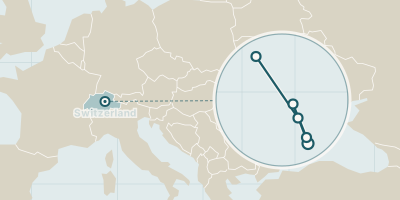
William Tell's legend is set around Lake Lucerne in central Switzerland: his home village Bürglen, the Rütli meadow, the marketplace of Altdorf where he shot the apple, the Tellsplatte where he leaped from the boat, and the Hohle Gasse near Küssnacht where Gessler was killed.
The route follows the story as the chronicler Tschudi and Schiller's play tell it. The legend is not documented history, and every stop is a traditional identification, but each place is real and can be visited.
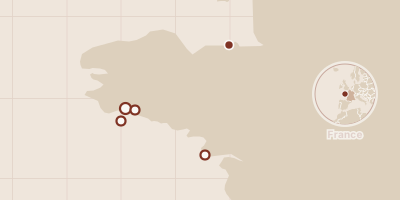
Commissaire Dupin is set in Brittany: Jean-Luc Bannalec's detective, a Paris policeman transferred to Concarneau, solves murders in Pont-Aven, on the Glénan islands and in the Guérande salt marshes.
This route follows the first three novels, Bretonische Verhältnisse, Bretonische Brandung and Bretonisches Gold, then looks at how the TV series borrows other places such as Saint-Malo. Settings in the story are partly invented.
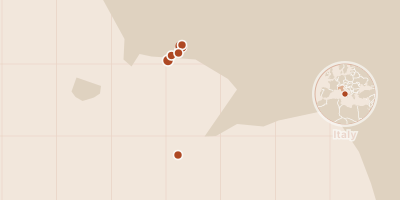
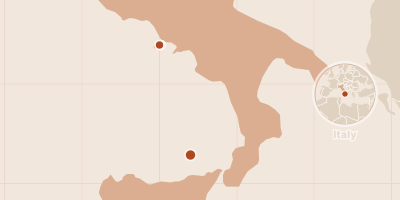
Parthenope (2024), Sorrentino's film, was shot in Naples and on Capri: Villa Lauro in Posillipo, the Galleria Umberto I, Federico II University, the Gardens of Augustus, Spaccanapoli, Naples Cathedral and Via Partenope. It follows a woman named after her city from her birth in 1950 to 2023.
The route runs in story order, from the sea at Posillipo to the seafront where the film ends.
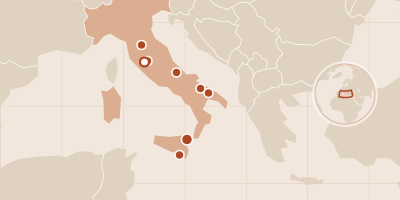
Matteo Garrone's Tale of Tales (Il racconto dei racconti, 2015) was shot entirely in Italy: Castel del Monte in Apulia, Donnafugata Castle in Sicily, Sammezzano Castle in Tuscany, Roccascalegna in Abruzzo and the Alcantara Gorge all play fairy-tale kingdoms.
The route follows the film's three tales through eight real locations, from the gorge where the sea dragon lives to the tuff lanes where an ogre chases a runaway princess. Several castles are used only for exteriors or interiors, and the notes say which.
The Secret Agent (O Agente Secreto) is set in Recife during the 1977 carnival and was filmed on location in the city: Rua da Aurora, the Cinema São Luiz, the Capibaribe River and Parque 13 de Maio, plus the Federal University of Pernambuco campus. Director Kleber Mendonça Filho follows Armando, a former professor on the run in the Brazilian military dictatorship.
The route walks the film's carnival week, from the parade street to the shark, the cinema and the park where the Hairy Leg legend, based on real newspaper reports, takes hold.
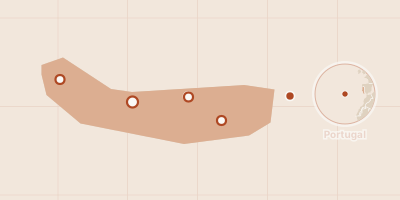
Rabo de Peixe, the Netflix series known as Turn of the Tide, is set in a fishing village on São Miguel in the Azores, but it was shot in several places across the island: Porto Formoso, the Arnel lighthouse, Furnas and the ruined Monte Palace Hotel above Sete Cidades.
The story is loosely based on a real 2001 cocaine landing. The route follows the series from the village to its final scenes, with a note on what you can visit today.
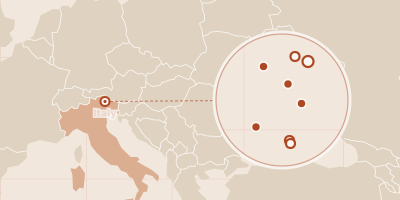
Un passo dal cielo, the Rai 1 series, is set in San Candido in South Tyrol and later in San Vito di Cadore in the Belluno Dolomites, but it was mostly filmed around Lago di Braies, Prato Piazza, Dobbiaco, Lago di Mosigo and Misurina.
This route follows the series from its South Tyrol seasons to its Cadore seasons, with eight places where scenes were set or shot. Where the sources only name a place, the pin marks the area.
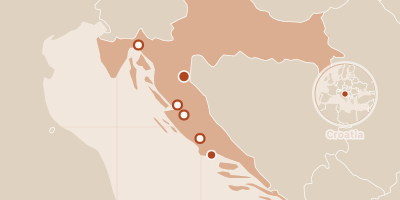
The Winnetou films of the 1960s are set in the Wild West but were shot in Croatia: the Silver Lake is Plitvice, the Apache pueblo stood above the Zrmanja canyon and Santa Fe is the town of Trogir.
This route follows three of the films (Der Schatz im Silbersee, Winnetou 1 and Winnetou 3, 1962 to 1965) from Plitvice and Paklenica to the Krka falls, Trogir and Mali Alan, where Winnetou dies. Most sets were torn down after filming, but the landscapes remain.
Il Postino (1994) was filmed on two islands: Procida in the Gulf of Naples, where Mario delivers Pablo Neruda's mail around Marina Corricella, Via San Rocco and Piazza dei Martiri, and Salina in the Aeolian Islands, whose Pollara bay hosts Neruda's house and a beach.
The film moves the story to Italy around 1950 and never names the island. This route follows the real places: the waterfront bar where Mario meets Beatrice, the village street, the post office square and the two beaches.
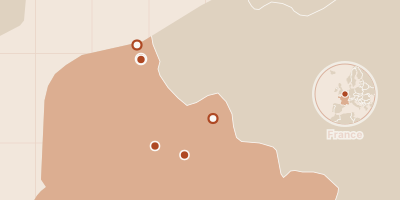
Welcome to the Sticks (Bienvenue chez les Ch'tis) is set in Bergues, near Dunkirk, and filmed there, with scenes in Lille, Lens, Malo-les-Bains and Bruay-la-Buissière.
A post-office manager from the south is sent north for two years and finds the warmest welcome of his life. The route follows the film from the café where Philippe crashes his bike to the belfry where the love story ends.
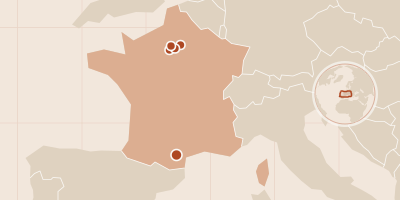
Les Visiteurs (1993) was filmed in Carcassonne, Thoiry, Ermenonville, Argenteuil and Vigny: the Château Comtal in the Cité de Carcassonne is the medieval castle, and the Château d'Ermenonville is Montmirail in the present day.
The route follows a 12th-century knight and his squire from 1123 to 1992, across five film locations, and notes where the film and the places differ.
Vauban's fortifications, a UNESCO World Heritage group, include the citadels of Lille and Besançon, the Mont-Louis citadel, the ramparts of Saint-Martin-de-Ré, Mont-Dauphin, Neuf-Brisach and the Asfeld Bridge at Briançon.
Louis XIV's military engineer drew a belt of strongholds around France. Each stop here is a place you can still walk through, and each shows a different way of making a border hard to cross.
Stops follow the date each fortress was begun. Some of them are still working towns, not just monuments.
Boston's Freedom Trail is a 2.5-mile walking route past 16 sites of the American Revolution, from the State House and Old South Meeting House to Paul Revere's House, Old North Church and Bunker Hill.
This route covers nine stops in order: the Massachusetts State House, the Granary Burying Ground, the Tea Party meeting house, the Old State House, Faneuil Hall, Revere's home, the lanterns of Old North Church, USS Constitution and the Bunker Hill Monument.
The Spartacus revolt began at a gladiator school in Capua, climbed Mount Vesuvius, ran south to the Strait of Messina and ended on the Sele River in 71 BC. It was the Third Servile War, the largest slave uprising Rome ever faced.
The route follows the rebellion in order: the breakout of 73 BC, the siege on Vesuvius, the failed attempt to cross to Sicily, the last battle against Crassus and the crucifixions along the Appian Way. Ancient sources were written a century or more later and disagree in places, so the exact spots of the school and the battlefield are approximate.
Heart of Darkness is set in the Congo Free State, a Belgian company's territory, and this route follows Marlow from Brussels to Boma, Matadi, the Livingstone Falls rapids and Kinshasa, then on to Kurtz's station upriver.
Conrad's novella names almost none of its places, so most stops are marked as likely identifications, drawn from Conrad's own job on the Congo River.
East of Eden is set in California's Salinas Valley, mostly between the start of the twentieth century and the end of World War I, and its places are Salinas, King City and the farmland between them. The 1955 James Dean film moved the story to Monterey on screen but was shot largely in Mendocino, with scenes in Spreckels and the valley.
This route follows John Steinbeck's novel through the valley, Kate's town of Salinas and the film's locations, so you can see where the story and the screen version happen.
Holden Caulfield's weekend in The Catcher in the Rye runs from a Pennsylvania boarding school to Grand Central Terminal, the Metropolitan Museum of Art, the Central Park Zoo and the Central Park Carousel in New York City.
The route follows Holden's escape from Pencey Prep and ends with his sister Phoebe on the carousel. The museum, zoo and carousel can all be visited; Pencey is invented, and the pin marks the real school Salinger may have used as its model.
Seventeen Moments of Spring is set in Berlin and Bern in 1945, but it was filmed mostly elsewhere: Arkhangelskoye-Tyurikovo park and Butyrka prison in Moscow, Jauniela in Old Riga, and the Saxon towns of Hohnstein and Meissen, plus the Berlin inn Zur letzten Instanz.
The route follows these real sites in the order of the Soviet spy series, from the Bavarian forest to Bern's Flower Street, and shows how Moscow and Riga stood in for wartime Germany and Switzerland.
Sirāt, Óliver Laxe's 2025 road film, is set in southern Morocco but opens at a Spanish rave: the Rambla de Barrachina near Teruel stands in for the desert, while the mountain road, the white sand and the train were shot near Errachidia and Erfoud.
The route follows the father Luis and his son Esteban as they chase a missing daughter and join a convoy of ravers. Each stop is a place in the film's region, not a precise pin: the director names the area, rarely the exact spot.