Mapped Chronicles

Catalog

All routes

More filters
MoviesSpeculative

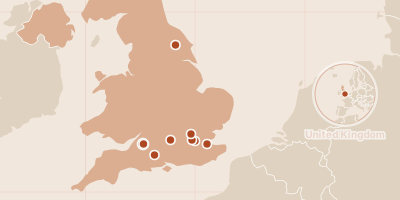
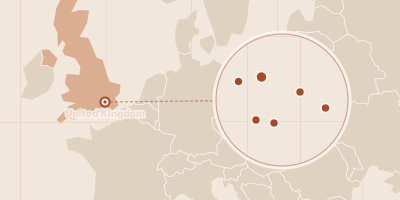
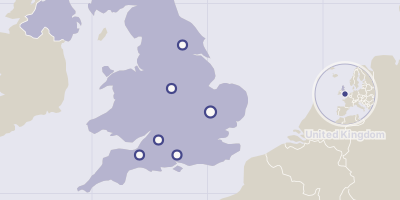
The Last Kingdom: Uhtred's England

Uhtred of Bebbanburg is a Saxon boy raised by Danish Vikings, and The Last Kingdom follows him through the wars that made England. This route takes the places of the story in order, from the fortress on the Northumberland coast to the marshes of Somerset, the field at Ethandun and the last battle at Brunanburh, setting each against what history records. The television series adapts Bernard Cornwell's Saxon Stories; where a stop follows a particular novel or series, the point says so. The show was filmed mainly in Hungary, so the places below are the real settings of the events, not the filming locations.

9 locations7/9 visitable
BooksApproximate

Wolf Hall: From Putney to the Tower

Thomas Cromwell rises from a Putney childhood to become Henry VIII's most trusted minister, then falls in the same Tudor politics he mastered. Hilary Mantel's trilogy follows him from Cardinal Wolsey's household through the Reformation, Anne Boleyn's rise and execution, and his own last years. This route traces the places that anchor the story: Cromwell's birthplace and London house, Wolsey's palaces at York Place and Esher, the abbey where Wolsey died, Westminster Abbey for Anne's coronation, the Seymour seat that gives the novels their title, Hampton Court, and the Tower. The 2015 television adaptation used Dover Castle for the Tower of London and Penshurst Place for Whitehall.

9 locations7/9 visitable
MoviesApproximate

The Witcher: Season One from Hungary to the Canaries

Netflix's Continent was built from a patchwork of real places: a Hungarian fort, a village museum, a former monastery, Canary Islands coasts and a ruined Polish castle. This route follows season one's shoot from October 2018 to May 2019: Cintra and Marnadal in Hungary, Aretuza and Ciri's desert in the Canary Islands, and Sodden Hill at Ogrodzieniec in Poland. Filming spots only; the Continent itself is invented.

7 locations3/7 visitable
BooksSpeculative

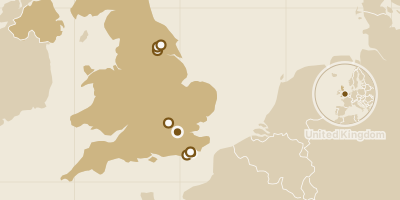
Dickens's London: Oliver Twist and Great Expectations

Two Dickens novels, one city of thieves' dens, prisons and cramped lodgings. Oliver Twist is dragged into Fagin's gang in the lanes of Holborn, while Pip of Great Expectations arrives from the Kent marshes expecting a soft white city and finds filth. The route follows Oliver and Nancy from Saffron Hill to London Bridge, Jacob's Island and Newgate, then Pip from Cooling churchyard through Rochester to Little Britain and Barnard's Inn. Several places are traditional models rather than named settings, and each pin says so.

8 locations5/8 visitable
BooksApproximate

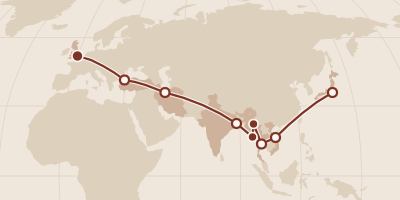
The Great Railway Bazaar: By Train Through Asia

In 1973 Paul Theroux set out from London Victoria on a four-month railway loop through Europe, the Middle East, the Indian subcontinent and Southeast Asia, then came back on the Trans-Siberian Railway. His travelogue, published in 1975, became a classic of the genre. This route follows episodes the book's reviewers single out, from the Direct-Orient Express to Istanbul, Calcutta, Burma, Vietnam and Tokyo. The book's own text could not be checked, so some pins mark a city's station rather than a scene, and some places are not safe to visit now.

9 locations6/9 visitable
MoviesExact

Bridgerton: From Bath to London

Bridgerton is set in London, but most of its streets are in Bath, its parks are in Wiltshire and its family home is in Greenwich. This route follows the filming locations from the Royal Crescent and Lady Danbury's house in Bath, through London and Kent, to the country houses that played Clyvedon and Aubrey Hall in the first two seasons.

9 locations4/9 visitable
MoviesApproximate

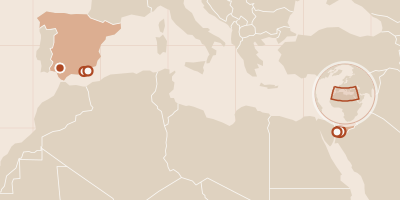
Lawrence of Arabia: Wadi Rum, Seville and Almería

David Lean's 1962 epic follows T. E. Lawrence through the Arab Revolt, but most of its Arabia was built in Spain. Seville played Cairo, Jerusalem and Damascus, while Almería and a beach near Carboneras supplied the desert and a whole replica of Aqaba. The route follows the story's order and keeps history apart from the film's shooting locations. Stops say plainly whether they show what happened in 1917 or where the cameras stood.

7 locations4/7 visitable
HistoryApproximate

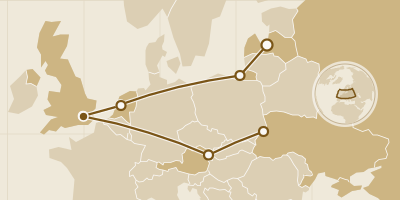
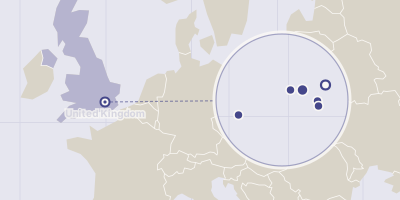
Peter the Great's Grand Embassy: Riga to Moscow

In March 1697 a great Russian embassy left Moscow for Europe, and the tsar went with it incognito as "Peter Mikhailov", though at 2.03 metres he was one of the tallest men around. He worked in shipyards, studied gunnery and tried to broaden the Holy League against the Ottoman Empire. The route follows the journey stop by stop: Riga and Königsberg, the Dutch shipyards, London and Deptford, then Vienna and the meeting with Augustus II at Rava-Ruska. Dates follow each source: the Dutch article uses the Gregorian calendar, the English and Russian sources the Old Style, so the labels say which.

8 locations1/8 visitable
GamesApproximate

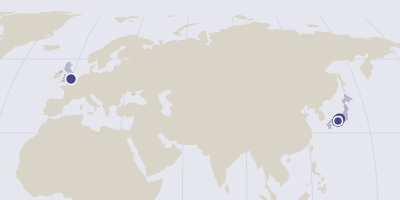
Nioh: From the Tower to Osaka Castle

Nioh sends William Adams, a blond outsider who becomes Ieyasu's ally, through a dark-fantasy version of 1600: demons in the mud of Japan's civil wars, alchemist Edward Kelley behind them, and Tokugawa Ieyasu rising above it all. Its story is stitched onto real places, from a London prison to the battlefield that made the Tokugawa shoguns. The route follows the main campaign and its last two expansions: the Tower of London, Kyoto, Sekigahara, then the Sanada-maru, Tennōji and Osaka Castle. The game is fantasy, so the map shows where its history happened, not where it was filmed or modelled.

6 locations6/6 visitable
HistoryApproximate

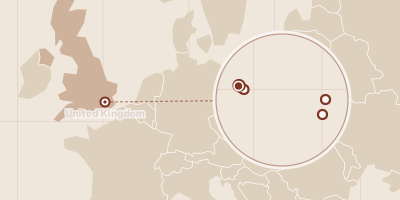
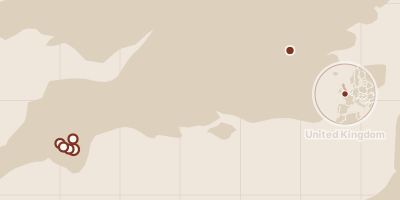
The Spanish Armada, 1588: From the Lizard to Streedagh

In the summer of 1588 a Spanish fleet appeared off Cornwall with a plan to join Parma's army. Beacons carried the news to London, the English fleet came out of Plymouth, and within weeks fireships, a day of heavy gunnery and autumn storms had ended the plan. The route follows the campaign through seven places, from the first sighting to a beach in County Sligo where three ships broke up. Most of the fighting was at sea, so the pins mark the nearest coast landmark, and the story of Drake and his game of bowls at Plymouth is labelled as legend.

7 locations5/7 visitable
Real JourneysApproximate

Hillary and Tenzing: The Road to Everest, 1953

At 11:30 a.m. on 29 May 1953 Edmund Hillary and Tenzing Norgay stood on the summit of Mount Everest, the first people confirmed to have done so. They were part of a British expedition led by Colonel John Hunt, which in the end amounted to over four hundred men, including twenty Sherpa guides and 362 porters. The route follows that expedition from winter training in Wales through Kathmandu, Thyangboche, Base Camp, the Khumbu Icefall, the Western Cwm and the South Col to the summit, then to the telegraph runner's stop at Namche Bazaar. Pins above Base Camp mark the terrain, not the exact camps of 1953.

9 locations4/9 visitable
Real JourneysApproximate

Amundsen and Scott: The Race to the South Pole

In 1910 two expeditions set out for the bottom of the world. Roald Amundsen's Norwegians, masters of skis and sled dogs, reached the South Pole on 14 December 1911. Robert Falcon Scott's party arrived on 17 January 1912, 34 days later, to find a Norwegian tent already standing. Amundsen sent his news from Hobart; Scott's party of five died on the return journey. The route follows both men from Cardiff and Madeira to their bases, up their two glaciers, to the Pole and to the endings: Amundsen's cables from Hobart and Scott's last camp. Antarctic pins mark glaciers and bays, not camps, and the ice has moved since.

10 locations1/10 visitable
Real JourneysApproximate

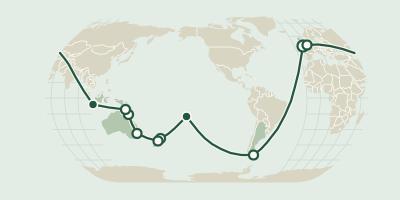
Captain Cook's First Voyage: Round the World in the Endeavour

On 26 August 1768 the Endeavour left Plymouth with 94 people aboard, bound for Tahiti to watch Venus cross the Sun. Almost three years later she anchored off the Kent coast again, having reached New Zealand and the east coast of Australia, and with many of her people lost to disease on the way home. The route follows James Cook's own journal and modern accounts through ten stops, from the anchorage at Plymouth to the Great Barrier Reef and Batavia. Dates follow modern accounts, which sometimes differ by a day from the journal.

10 locations7/10 visitable
HistoryApproximate

1066: Stamford Bridge to Hastings

Edward the Confessor died childless in January 1066, and by the end of the year the crown had passed through Harold Godwinson to William of Normandy. Between the two coronations lie three battles in three weeks, fought at opposite ends of England by a king who marched his army the length of the country twice. The route follows the crown from Westminster to the Yorkshire landing of Harald Hardrada, Fulford and Stamford Bridge, then to Pevensey, Hastings and the field at Battle, and back to Westminster on Christmas Day. The exact ground of several battles is debated, so those pins mark the best-known sites.

9 locations8/9 visitable
MythologySpeculative

King Arthur: From Merlin's Dragons to Avalon

King Arthur belongs to no single place. His story was built up by Geoffrey of Monmouth, Thomas Malory and many others, and this route follows it in the legend's own order: Merlin's dragons, Arthur's conception and coronation, his battles and court, the last fight, the sword in the water and Avalon. Every pin marks a real place that tradition has attached to an episode, not a site proven by history, and each stop says where the link is doubted.

9 locations5/9 visitable
BooksFictional

The Hound of the Baskervilles: Across Dartmoor

A cursed squire, a spectral hound and a moor that swallows ponies: Conan Doyle's Sherlock Holmes novel, serialised in The Strand Magazine in 1901–02, is set largely on Dartmoor, and several of its places have real counterparts. The route runs from the grave that may have inspired the legend and the ten-thirty train from Paddington to the convict prison at Princetown, the mire, the tors and the Stapletons' house. Baskerville Hall and Merripit House exist only in the book, so their pins mark a stand-in or nothing at all.

7 locations5/7 visitable
GamesApproximate

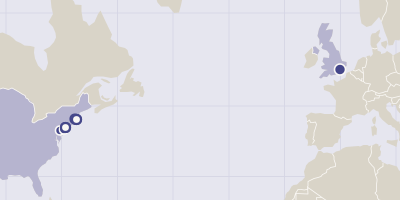
Assassin's Creed III: The American Revolution

In 1754 a British gentleman, Haytham Kenway, kills a man at the opera in London and carries a stolen key to the American colonies. He is a Templar. His son, Connor, grows up to become the Assassin who hunts him across the American Revolution — through the Boston Massacre and the tea ships, the first shots at Lexington, Bunker Hill, Valley Forge, Monmouth and finally New York. Assassin's Creed III builds its America from real maps, and almost every stop can still be walked: the opera house in Covent Garden, the Old State House and Boston Harbor, the green at Lexington and the bridge at Concord, the Bunker Hill battlefield, the Valley Forge encampment, the Monmouth battlefield, and the Battery at the foot of Manhattan, where the war ends.

9 locations9/9 visitable
GamesSpeculative

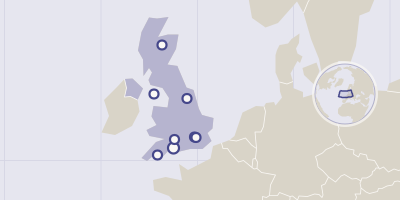
Pokémon Sword and Shield: The Britain Behind Galar

The Galar region is Britain played back as a game: a fictional land inspired by the United Kingdom, dotted with landmarks that recall Bath and York, crowned by a London of clock towers and football-stadium gyms. Eight gym cities, eight badges, and then the Champion's Cup in Wyndon, where Leon waits and the Darkest Day breaks. This route walks the real Britain behind that map, south to north and then beyond: a chalk giant, a lighthouse, Roman baths, a minster, a national stadium and a clock tower, plus the two downloadable lands, the Isle of Man and the snows of Scotland. Every identification is a fan or developer reading, never confirmed in the games, so every pin here is speculative.

8 locations8/8 visitable
GamesApproximate

Assassin's Creed Syndicate: Victorian London

In 1868, at the onset of the Second Industrial Revolution, twin Assassins Jacob and Evie Frye come to a London controlled by the Templars under Crawford Starrick, and set out to take the city back: building their street gang, the Rooks, across an open world of seven Victorian boroughs. Jacob works through Starrick's lieutenants while Evie hunts a Piece of Eden, the Shroud, from St Paul's to the Tower to a vault under Buckingham Palace. This route follows both threads across the capital, then jumps forward: to Whitechapel in 1888, where Evie hunts Jack the Ripper in the expansion, and to Tower Bridge in 1916, where Jacob's granddaughter Lydia clears a German spy nest at Churchill's request. Every stop is a real building or district you can walk to.

6 locations4/6 visitable
MoviesExact

Sherlock: 221B and London

The BBC's Sherlock Holmes and his flatmate, army doctor John Watson, solve crimes in present-day London, from a killer's phone traced to their own doorstep to a dominatrix with compromising photographs and a criminal who cracks the Crown Jewels from his mobile. Six stops follow the first three series in order: the 221B front door on North Gower Street, the Baker Street museum, a summons to Buckingham Palace, Moriarty's Tower heist, the hospital rooftop finale and a bomb under Parliament. Most stops are London landmarks you can see from the street; the 221B door is a private house, and the palace, Tower, hospital and Parliament appear as the show's story settings.

6 locations2/6 visitable
GamesApproximate

Assassin's Creed Valhalla: Chasing the Order in England

Assassin's Creed Valhalla brings the Viking Eivor and their clan to Anglo-Saxon England, where Hytham asks for help ridding the land of the Order of the Ancients. Following tip-offs from an informant who signs himself the "Poor Fellow-Soldier of Christ", Eivor hunts Order members from Grantebridge to Jorvik and Wincestre. The route visits the real places behind the game's: Cambridge, where the jarlskona Soma takes back her town; York, the capital of Viking Britain; the docks of Repton, where the Great Heathen Army wintered; Alfred's Winchester; the battle at Chippenham in 878; and Athelney, where the informant's identity is finally revealed. All six can be visited today.

6 locations6/6 visitable
MoviesApproximate

Star Wars: Beyond Tatooine

Tatooine is the Star Wars desert everyone knows, but the films kept finding other corners of the Earth for their galaxy: redwoods in northern California, a villa on Lake Como, a plaza in Seville, the desert around an oasis in Abu Dhabi, a monastery island off County Kerry and the largest salt flat in the world, in Bolivia. This route follows the shooting in the order the films were made, from the Endor forest of Return of the Jedi to the Crait battle of The Last Jedi. Two stops mark an area rather than a spot: the Endor scenes were partly shot on private land, and no source names the stretch of desert that stood in for Jakku.

6 locations5/6 visitable
MoviesApproximate

Game of Thrones: Winterfell and the Wall in Northern Ireland

Much of Game of Thrones' North was filmed in Northern Ireland. Winterfell, its godswood, Castle Black, the Kingsroad and a fishing harbour that played Pyke were all real ground dressed as Westeros, and a basalt hillside above a small Antrim village hosts the first execution of the series. The route runs in the order the episodes aired: the deserter's beheading above Cairncastle and the Winterfell of Castle Ward, then the quarry that held Castle Black and the Wall, the godswood, the Kingsroad beech avenue and the harbour where Theon Greyjoy comes home. The last stop is the Moneyglass estate, where a bigger Winterfell was built for the second season and used again for the eighth season's battle. Almost everything here is exterior: Winterfell's great hall was a soundstage set.

7 locations4/7 visitable
MoviesApproximate

Outlander: Claire's Scotland

Claire, a twentieth-century nurse, touches a stone in a Highland circle and is carried back to 1743. A highlander knocks out the officer chasing her and takes her to his clan, and before long she is married to Jamie Fraser to keep her out of that officer's reach. Seven stops follow Claire through the first two seasons of Starz's Outlander. They start near Kinloch Rannoch, where the production found its Craigh na Dun, then move to the real castles and villages playing Castle Leoch, Fort William, Cranesmuir and Lallybroch, and to a Fife castle standing in for a French abbey. The last stop is Culloden, the moor where Claire and Jamie say goodbye in the second-season finale. One caveat: the standing stones on screen are a built set. The Bronze Age Clava Cairns near Inverness that fans often visit are said to have inspired them, but they are not where the circle was filmed.

7 locations6/7 visitable